Why we built it
My brother and I both tried to start companies at our respective colleges, and we hit the same wall in two different places, which was that finding people to build with was harder than any part of the actual building. The campus entrepreneurship hub was open to anyone who wanted it, so getting in was never the problem. It was just the only outlet either of us had, and the pool of students inside it was very finite.
Startup ideas do not necessarily die at that point. They stall against however many people happen to be in that one room, and a ceiling set by the size of the room is a much more fixable problem than a shortage of ideas.
What it is
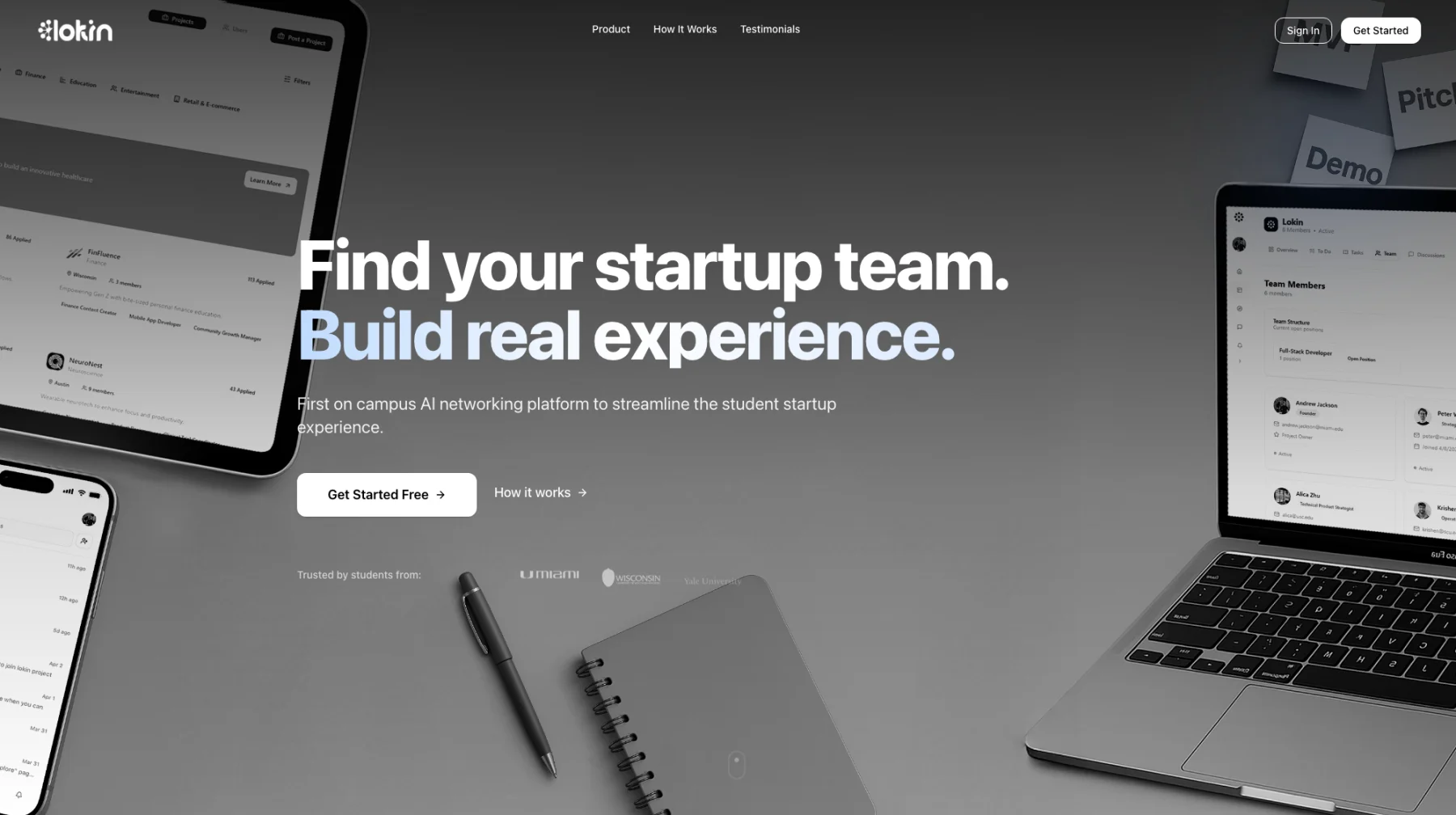
Lokin is the digital version of that hub, built to widen the pool rather than replace the room. A student posts a project along with the roles it still needs, and other students apply to those roles the same way they would apply to an internship, which turns a vague search for a co-founder into something with an actual surface to act on.
Around that posting sit the parts that make it worth doing: a people directory for browsing the campus by what someone can actually build, a jobs view carrying open roles across student-led startups and real projects, a feed that keeps everyone current on what is being worked on, and an explore surface for the campus programs and resources that exist but nobody can name. Once a team forms around a project, it gets managed in the same place rather than scattering into group chats.
I co-founded it on a team of four, leading product across research, roadmap, and much of the build. We reached 500+ signups in the first months through campus outreach, club partnerships, and a startup conference.